Showing posts with label brains. Show all posts
Showing posts with label brains. Show all posts
Tuesday, September 17, 2013

Wednesday, December 26, 2012
Religion and the Love/Hate Emotion
A college friend of mine pointed out once that love and hate are not opposites. She pointed out that they are the same and that apathy is their opposite.
My experience since then has found this to have been, and to still be, profoundly true.
Both love and hate can drive a person insane. Both can induce irrationality in a person otherwise completely rational. Both can alter the courses of lives. Both can be powerful motivators.
Love and hate are the opposite faces of the same coin. The coin of passion.
The coin of passion is much like The Force in Star Wars. It has a light side and a dark side.
The light side is used construct, build and help while the dark side is used to destroy and aggregate power and for revenge.
Obviously the difference is the direction of the passion and not the passion itself.
Love is much like the Jedi path while hate is the path of the Sith.
The Star Wars analogy, of course, is not a new one for any fans of the series (nor people who have even heard of it) and I am not claiming any originality in making it.
What interests me more than the Star Wars analogy to love/hate is the realization that religion is just an application of this emotional coin. Religious fervor is much like the irrational motivations people have when they are deeply in love or when they are deeply motivated by hatred.
Those affected by such devotion to a religion have the same level of responses to their faith and the doctrines of it that people have toward the object of their love/hate.
When people let this emotion warp and twist their lives they turn into hate machines that are willing to apply that hate toward everything and anything that opposes their faith. They will kill. They will torture. They will maim. They will steal. They will do all of the evil and bad things that people do when they hate something.
When people have a religious indoctrination based on the emotionally less-mature path that is easier to manage through destruction they are a detriment to ALL of mankind. They become examples of why humanity shouldn't be allowed to survive and become examples of why religion is bad. They make me glad that I lack any and all faith in anything because I never want to experience the level of darkness that their faith brings into their heart. There are far too many people like this in the news because they can do such a disproportionate amount of damage to others and that is scary to everyone else.
Conversely, though, are the people who find religion enhances their lives in positive ways.
I have many friends of faith. Many friends whose faith enriches their lives. Many friends whose faith brings them peace and comfort. Many friends whose faith is absolute and drives them to love their fellow man with the same heart-wrenching level of compassion as they have for the people they know in person. Many people who make me want to be a better person. Many people whose faith in their deity makes me angry that the gift of faith was never bestowed on me. These people are some of the best people I know and their love and tolerance makes the world a better place. There people, when they make the news, generate heart-warming stories that restore a small portion of my humanity. Unfortunately we do not have enough examples and stories of people helping others. We don;t have these stories because they are boring. Fear sells because it is actionable. Happiness does not sell because it is not.
Religious faith, therefore, must be the same emotion.
I find this revelation interesting that religion is just an extension of the love/hate emotion.
Which leads me to wonder if people who lack emotion or have trouble parsing love or hate or whose love/hate baseline is set at a different "neutral" position have vastly different (this is a relative term) brain structures or chemistries in a certain structure of their brains.
Just another idle ponderance that infected my mind and would not leave until I wrote it down. Feel free to comment, discuss, add links to relevant scientific articles, etc.
My experience since then has found this to have been, and to still be, profoundly true.
Both love and hate can drive a person insane. Both can induce irrationality in a person otherwise completely rational. Both can alter the courses of lives. Both can be powerful motivators.
Love and hate are the opposite faces of the same coin. The coin of passion.
The coin of passion is much like The Force in Star Wars. It has a light side and a dark side.
The light side is used construct, build and help while the dark side is used to destroy and aggregate power and for revenge.
Obviously the difference is the direction of the passion and not the passion itself.
Love is much like the Jedi path while hate is the path of the Sith.
The Star Wars analogy, of course, is not a new one for any fans of the series (nor people who have even heard of it) and I am not claiming any originality in making it.
What interests me more than the Star Wars analogy to love/hate is the realization that religion is just an application of this emotional coin. Religious fervor is much like the irrational motivations people have when they are deeply in love or when they are deeply motivated by hatred.
Those affected by such devotion to a religion have the same level of responses to their faith and the doctrines of it that people have toward the object of their love/hate.
When people let this emotion warp and twist their lives they turn into hate machines that are willing to apply that hate toward everything and anything that opposes their faith. They will kill. They will torture. They will maim. They will steal. They will do all of the evil and bad things that people do when they hate something.
When people have a religious indoctrination based on the emotionally less-mature path that is easier to manage through destruction they are a detriment to ALL of mankind. They become examples of why humanity shouldn't be allowed to survive and become examples of why religion is bad. They make me glad that I lack any and all faith in anything because I never want to experience the level of darkness that their faith brings into their heart. There are far too many people like this in the news because they can do such a disproportionate amount of damage to others and that is scary to everyone else.
Conversely, though, are the people who find religion enhances their lives in positive ways.
I have many friends of faith. Many friends whose faith enriches their lives. Many friends whose faith brings them peace and comfort. Many friends whose faith is absolute and drives them to love their fellow man with the same heart-wrenching level of compassion as they have for the people they know in person. Many people who make me want to be a better person. Many people whose faith in their deity makes me angry that the gift of faith was never bestowed on me. These people are some of the best people I know and their love and tolerance makes the world a better place. There people, when they make the news, generate heart-warming stories that restore a small portion of my humanity. Unfortunately we do not have enough examples and stories of people helping others. We don;t have these stories because they are boring. Fear sells because it is actionable. Happiness does not sell because it is not.
Religious faith, therefore, must be the same emotion.
I find this revelation interesting that religion is just an extension of the love/hate emotion.
Which leads me to wonder if people who lack emotion or have trouble parsing love or hate or whose love/hate baseline is set at a different "neutral" position have vastly different (this is a relative term) brain structures or chemistries in a certain structure of their brains.
Just another idle ponderance that infected my mind and would not leave until I wrote it down. Feel free to comment, discuss, add links to relevant scientific articles, etc.
Tuesday, September 4, 2012
Brain size and complex thoughts
I have been thinking a lot lately about self-awareness and other abstract brain functions as compared to the size on one's brain.
One thing that I find tremendously interesting is that people of differing head sizes don;t, necessarily, have intelligence that correlates to their brain size. The volume and shape of the cavity in their skull is not the determining factor in the overall ability for them to process information and make use of it.
Why then, do humans seem to be at the top of the intelligence scale?
What makes us so different if the differences in brain sizes amongst us are not the single-most deterministic variable for human intelligence?
Does this mean that other animals are smarter than humanity gives them credit for?
I think so.
For example I have several pets.
I have a dog:
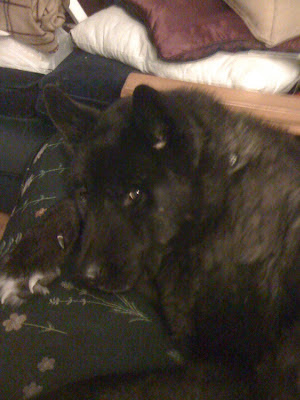
and I have three ferrets:

(Yes, there are actually three of them in the same pouch)
There used to be four ferrets but this guy has moved on:

And I have a sugar glider:

And, for the sake of this discussion I will include a visitor of variable frequency who likes the free food in my kitchen in the winter:

Watching these animals on a daily (in some cases) basis makes me contemplate how much they think and understand their world. It makes me wonder how much they contemplate things. It makes me wonder what goes on in their heads.
I know, without any hesitation of uncertainty, that they think. I know that they are different. Each of the four ferrets above have (had) vastly different personalities. Each of them have very different behavioral patterns. Each of them differs greatly from any of the other animals shown on this page.
For example this guy:

understands the concept of confinement. He understands that he likes being out of his cage and he understands that he likes being in the playpen. He understands he likes space. He also understands the basic needs and that people are his caregivers.
I'm not sure; however, that he understands much more than that. He's not stupid, but he's not enticed by trying to do more with his life than play, sleep, eat and go potty.
This one, on the other hand, is different:

She, while being about two-thirds the size of the one above, is feisty. She understands the concept of confinement but, more importantly, she also understands the concept of freedom. She understands that a bigger pen is not the same as being free. She understands that freedom is not simply the opposite of confinement. She wants freedom.
She will systematically test the bars on their cage and she will systematically test every vertical post on their playpen. She will move around and around and around the play pen trying to find a means to climb out. She wants to explore and see "the world."
This one has no fear and no conception of boundaries. She has bitten the dog on the nose (his fault - he was harassing them in their playpen) and postured with an attitude that she would take him if he retaliated... and, he believed it.
This little ferret thinks and reasons. She bluffs and lies. She loves and snuggles. She is a complex being. Her "brother" is a simple animal that lives a simple life.
The other pets, the dog and the sugar glider, each have their own agendas. The dog understands freedom but, more importantly, loneliness and loyalty. He understands who his pack is and that we are more important to him than anything else. He also knows how to lie (all dogs do) and will gladly tell anyone and everyone that no one ever feeds him, that he never gets any love or attention and that he never gets to go for a walk. He also knows he is getting old. He may not know the concepts, but he knows the feelings. He knows that his medication makes him feel better. He knows that if he goes poop on a walk that I make us come back home via our dumpster but if he does not we can come right to the door. He knows that the four-lane road is VERY dangerous and the two-lane road is something to "stay out of." Some of this is conceptual and some of this is simple stimulus-response.
The sugar glider, by far the simplest of my pets, seems to be mostly a stimulus-response animal. The infrequent visitor, who fills the same evolutionary niche but through parallel tracks, and the sugar glider seem to have identical behavior patterns. Food, shelter, water, shelter, warmth. That is what they seek. Things that may threaten them cause them to seek shelter, things that do not threaten them probably will feed them.
My question is, and always will be - what is what? How much can a dog (or ferrets, etc) actually have "going on" in their minds with brains that are so much smaller than human brains?
I think the answer is clear: more than we realize.
I've discussed this with some other animal owners and with friends who are veterinarians (also animal owners) and the ideas vary widely on how much animals conceive and think.
Feel free to chime in on your own below.
One thing that I find tremendously interesting is that people of differing head sizes don;t, necessarily, have intelligence that correlates to their brain size. The volume and shape of the cavity in their skull is not the determining factor in the overall ability for them to process information and make use of it.
Why then, do humans seem to be at the top of the intelligence scale?
What makes us so different if the differences in brain sizes amongst us are not the single-most deterministic variable for human intelligence?
Does this mean that other animals are smarter than humanity gives them credit for?
I think so.
For example I have several pets.
I have a dog:

and I have three ferrets:

There used to be four ferrets but this guy has moved on:

And I have a sugar glider:

And, for the sake of this discussion I will include a visitor of variable frequency who likes the free food in my kitchen in the winter:

Watching these animals on a daily (in some cases) basis makes me contemplate how much they think and understand their world. It makes me wonder how much they contemplate things. It makes me wonder what goes on in their heads.
I know, without any hesitation of uncertainty, that they think. I know that they are different. Each of the four ferrets above have (had) vastly different personalities. Each of them have very different behavioral patterns. Each of them differs greatly from any of the other animals shown on this page.
For example this guy:

understands the concept of confinement. He understands that he likes being out of his cage and he understands that he likes being in the playpen. He understands he likes space. He also understands the basic needs and that people are his caregivers.
I'm not sure; however, that he understands much more than that. He's not stupid, but he's not enticed by trying to do more with his life than play, sleep, eat and go potty.
This one, on the other hand, is different:

She, while being about two-thirds the size of the one above, is feisty. She understands the concept of confinement but, more importantly, she also understands the concept of freedom. She understands that a bigger pen is not the same as being free. She understands that freedom is not simply the opposite of confinement. She wants freedom.
She will systematically test the bars on their cage and she will systematically test every vertical post on their playpen. She will move around and around and around the play pen trying to find a means to climb out. She wants to explore and see "the world."
This one has no fear and no conception of boundaries. She has bitten the dog on the nose (his fault - he was harassing them in their playpen) and postured with an attitude that she would take him if he retaliated... and, he believed it.
This little ferret thinks and reasons. She bluffs and lies. She loves and snuggles. She is a complex being. Her "brother" is a simple animal that lives a simple life.
The other pets, the dog and the sugar glider, each have their own agendas. The dog understands freedom but, more importantly, loneliness and loyalty. He understands who his pack is and that we are more important to him than anything else. He also knows how to lie (all dogs do) and will gladly tell anyone and everyone that no one ever feeds him, that he never gets any love or attention and that he never gets to go for a walk. He also knows he is getting old. He may not know the concepts, but he knows the feelings. He knows that his medication makes him feel better. He knows that if he goes poop on a walk that I make us come back home via our dumpster but if he does not we can come right to the door. He knows that the four-lane road is VERY dangerous and the two-lane road is something to "stay out of." Some of this is conceptual and some of this is simple stimulus-response.
The sugar glider, by far the simplest of my pets, seems to be mostly a stimulus-response animal. The infrequent visitor, who fills the same evolutionary niche but through parallel tracks, and the sugar glider seem to have identical behavior patterns. Food, shelter, water, shelter, warmth. That is what they seek. Things that may threaten them cause them to seek shelter, things that do not threaten them probably will feed them.
My question is, and always will be - what is what? How much can a dog (or ferrets, etc) actually have "going on" in their minds with brains that are so much smaller than human brains?
I think the answer is clear: more than we realize.
I've discussed this with some other animal owners and with friends who are veterinarians (also animal owners) and the ideas vary widely on how much animals conceive and think.
Feel free to chime in on your own below.
Subscribe to:
Posts (Atom)